%20(1).webp)
Choosing platforms first and audiences second is an outdated model. Reach the right households instead.
Streaming advertising has become one of the most powerful ways to reach consumers—but most businesses still approach it with an outdated mindset.
They start by asking:
“Should we advertise on Hulu?” “Is Netflix better?” “What about YouTube TV or ESPN+?”
At first glance, those seem like smart questions. But they’re rooted in an older way of thinking about media buying—one where advertisers choose channels first and audiences second.
That’s no longer how people consume content.
Today’s viewers jump constantly between platforms, devices, and services. A household might watch Netflix on Monday night, stream live sports during the week, and turn on another service over the weekend. Their attention moves fluidly across the streaming ecosystem.
So if your advertising strategy depends on picking the “right platform,” you’re already limiting your reach.
The better approach is much simpler: stop choosing platforms. Start choosing people.
Streaming ads are video advertisements delivered through internet-connected television environments instead of traditional cable or broadcast TV.
This category typically includes streaming inventory across ad-supported services, connected TV environments, streaming cable TV, and premium streaming inventory.
Unlike traditional television advertising, streaming campaigns allow advertisers to target specific audiences instead of buying broad programming blocks and hoping the right people happen to be watching.
That’s why streaming has become increasingly attractive for businesses that want television-level attention with digital-level targeting.
Traditional digital advertising has become crowded and noisy.
Consumers ignore banner ads. Social media algorithms change constantly. Cookie-based targeting is weakening. Open-web display inventory often prioritizes volume over quality.
Streaming is different because it commands attention. When someone watches content on a television, the screen is larger, the experience is immersive, the content is intentional, and distractions are lower.
And unlike traditional TV, streaming campaigns can now be targeted with far greater precision.
That combination—high attention plus modern targeting—is why streaming has become one of the fastest-growing areas in advertising.
Most streaming ad platforms still force advertisers to think in silos: one streaming platform, one inventory source, one channel, one environment.
Then you allocate budget and hope your audience spends enough time there to notice your ads.
But modern audiences don’t stay in one place. A potential customer might watch one service in the evening, stream live sports during the week, and open a different app during the day.
If your campaign only exists in one ecosystem, your visibility becomes fragmented.
That’s where many streaming campaigns quietly fail—not because streaming doesn’t work, but because advertisers are still buying it like traditional media.
The most effective streaming campaigns today are built around the audience itself.
Instead of asking “Where should we run ads?” the smarter question is “Who are we trying to reach?”
Once that audience is identified, the system should handle the delivery automatically. That’s the philosophy behind AdLever.
Rather than forcing advertisers to manually choose platforms, AdLever focuses on household-level audience targeting. Campaigns are designed to follow real households across streaming environments wherever they consume content.
That means advertisers spend less time managing media placement and more time focusing on the audience, the messaging, the offer, the geography, and the business outcome.
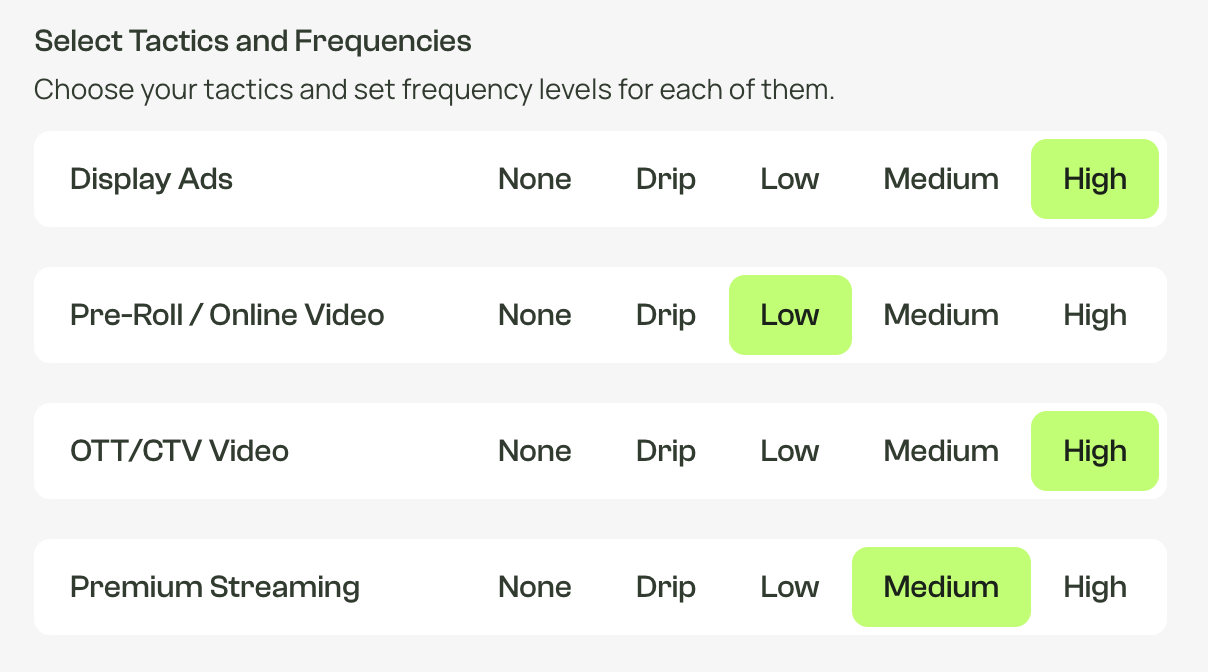
AdLever connects campaigns to multiple categories of streaming inventory through a single platform—including premium services, live TV, sports content, and ad-supported streaming environments—rather than one isolated placement.
AdLever supports household-targeted streaming inventory across ad-supported services and connected TV environments, so campaigns can appear across smart TVs, streaming devices, and connected television ecosystems while remaining focused on the target household rather than a single app.
AdLever also supports inventory across major premium streaming platforms, giving advertisers access to high-quality streaming environments without needing separate platform relationships or fragmented campaign management.
For advertisers interested in live television-style experiences, AdLever also supports streaming cable inventory, bridging the gap between traditional television advertising and modern audience targeting.
One of the most valuable categories in streaming today is live content. AdLever supports specialized inventory around sports, political content, and thematic audience bundles—environments that often generate higher engagement because viewers are actively paying attention to the content in real time.
The advantage of audience-first advertising is simple: the campaign follows the person, not the platform.
Instead of trying to predict where someone might be watching, advertisers can maintain visibility across multiple streaming environments as audience behavior changes naturally. That creates:
It also reflects how people actually consume media today. Consumers don’t think in channels anymore. They think in content. Advertising strategies need to evolve the same way.
One of the biggest misconceptions in digital advertising is that streaming should be evaluated purely on cost per thousand impressions.
Cheap impressions alone don’t build awareness or influence behavior. What matters is:
That’s why premium streaming inventory often outperforms lower-quality open-web advertising, even at a higher cost per impression.
The goal isn’t simply to generate impressions. It’s to create meaningful exposure with the people most likely to matter to your business.
Streaming advertising is no longer just a branding tactic reserved for enterprise companies. Modern platforms have made it accessible for:
But success depends on approaching streaming the right way.
The old model was: pick a platform and hope your audience is there. The modern model is: identify the audience and follow them wherever they go.
That’s the shift AdLever was built around.
AdLever helps businesses and agencies run household-targeted streaming campaigns across premium inventory and live TV environments from one platform.
Build an audience from your own contacts or verified household data, and reach those households on the devices they actually use.