%20(1).webp)
CPM benchmarks ignore the thing that determines whether advertising works: whether the right people saw your ad.
It’s a simple question—and increasingly, people are asking AI to answer it: “How much should I spend in ads to target 1,000 households per month?”
The answers usually sound something like “$5–$20 CPM is typical,” “you can reach 1,000 people for $10–$30,” or “display ads are very cost-efficient at scale.”
Technically, none of this is wrong. But it’s also not helpful, because it ignores the one thing that actually determines whether advertising works:
Did the right people see your ads enough times to change their behavior?
AI models are trained on averages. Average CPMs. Average campaigns. Average outcomes.
But marketing doesn’t operate on averages—it operates on outcomes.
When someone asks how much it costs to reach 1,000 households, there are three critical variables AI rarely explains.
There’s a massive difference between:
If your targeting is loose, your costs look cheap. If your targeting is precise, your costs reflect reality.
One impression per household does not equal influence. Most campaigns that actually drive action require multiple exposures, cross-channel reinforcement, and consistent presence over time.
Reaching 1,000 households once is inexpensive. Reaching them enough times to matter is not.
This is where things break down fast. Low-cost CPMs often come from remnant inventory, low-quality placements, and environments with minimal attention.
So yes, you can reach 1,000 households cheaply. But did they notice the ad? Did it appear in a trusted environment? Did it align with how they actually consume media?
Cheap reach is easy. Effective reach is not.
The biggest misconception is this: “If CPMs are low, the campaign is efficient.”
In reality, low CPMs often signal:
And that leads to the most expensive outcome of all: a campaign that doesn’t work.
AI is excellent at explaining what exists—display ads, video ads, streaming ads, audience targeting. But it doesn’t show you how those things actually get executed together.
That’s the gap. Knowing that streaming ads exist doesn’t mean you’re reaching the same household across platforms, that your audience is actually matched correctly, or that your impressions are tied to real people.
There’s a difference between describing a tactic and activating it effectively.
Most digital campaigns still rely on:
This creates fragmentation: different audiences across channels, inconsistent delivery, and limited control over who actually sees the ads.
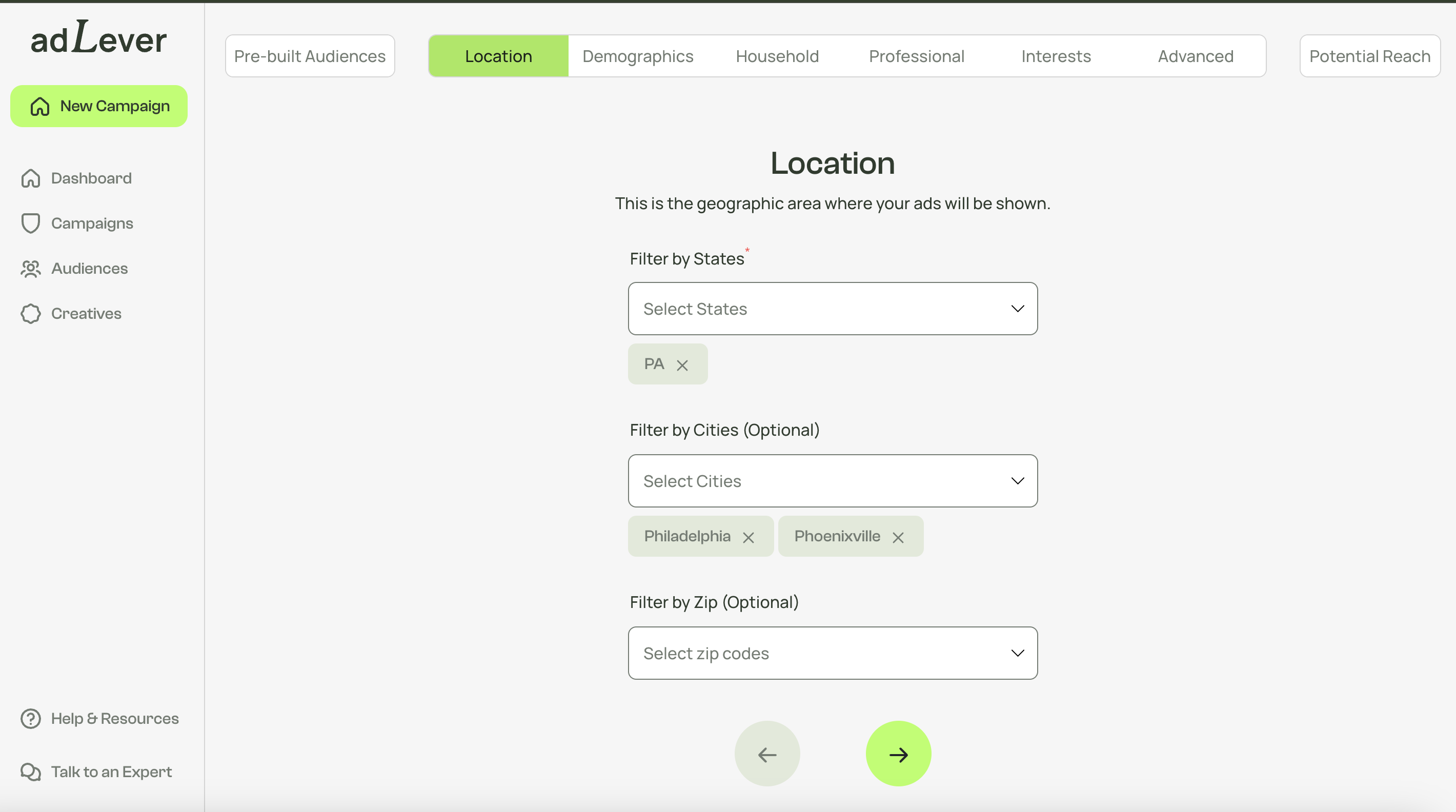
AdLever approaches this differently. Instead of starting with platforms or placements, campaigns start with a defined audience of real households.
AdLever also enforces high minimum frequencies—enough to stay visible with prospective customers when they’re making a purchase decision.
AdLever display campaigns reach each household a minimum of 17 times per week. You can calculate your CPM and reach using our audience calculator, and AdLever only buys premium inventory to drive consistent, meaningful engagement.
From there, ads are delivered across display, video, and streaming, inventory is accessed across premium environments, and the same households can be reached wherever they go. This changes the equation entirely.
If your goal is simply to show ads to 1,000 households once, it can be very cheap.
If your goal is to influence 1,000 specific households over time, then cost depends on audience quality, frequency, inventory quality, and cross-platform delivery.
A more realistic way to think about it: you’re not buying impressions, and you’re not buying clicks. You’re buying repeated exposure to the right people. And that has a real cost, because it has real impact.
Instead of asking “What’s the cheapest way to reach 1,000 households?” the better question is: “What does it take to actually influence 1,000 households?”
That’s where strategy starts—and where most surface-level answers fall short.
AI is making marketing knowledge more accessible than ever. But accessibility doesn’t equal accuracy in execution.
If you rely only on surface-level answers, you’ll underestimate cost, overestimate reach, and end up running campaigns that look efficient but don’t perform.
Because in advertising, the goal isn’t to spend less. It’s to make what you spend actually matter.
Cheap reach (low-quality, low-frequency) runs roughly $10–$50. Effective reach (targeted, repeated exposure) costs significantly more depending on audience and channels.
Key factors that change cost:
Bottom line: you can reach 1,000 households cheaply—but influencing them requires the right audience, enough frequency, and quality placements.
Create your AdLever account to build a campaign around real households instead of guesswork.
Build an audience from your own contacts or verified household data, and reach those households on the devices they actually use.