%20(1).webp)
What demand generation actually means, and the strategies that move people from unaware to interested.
Demand generation is a vital part of modern marketing. It focuses on creating awareness and interest in a company’s products or services. To attract potential customers and guide them through the buying process, businesses use a mix of strategies and tactics.
Demand generation encompasses the series of activities that create interest in a product or service. It includes marketing strategies that engage potential customers, educate them, and prompt them to make a purchase.
The aim isn’t just to gather leads, but to cultivate relationships with potential customers—guiding them through the buyer’s journey from awareness and consideration to decision-making.
Demand generation is critical to a business’s marketing strategy for a few reasons:
Content marketing is central to demand generation. It involves creating and sharing valuable content that engages the target audience—blog posts, ebooks, webinars, or videos. A software company, for example, might produce a webinar on best practices for using their product, attracting potential customers looking to improve their skills.
Email marketing is an effective channel to reach potential customers directly. Sending personalized emails based on previous interactions helps businesses nurture leads effectively.
SEO enhances visibility on search engines, making it easier for potential customers to find relevant content. If a business targets a specific niche, appearing on the first page of search results can attract a steady stream of interested visitors.
While not the primary driver, social media platforms help businesses engage with potential customers. Posting valuable content and interacting with followers fosters a community around the brand.
Hosting webinars and events is an effective demand generation tactic, giving businesses a platform to showcase expertise. Free educational webinars often capture attendee information, enabling targeted follow-up.
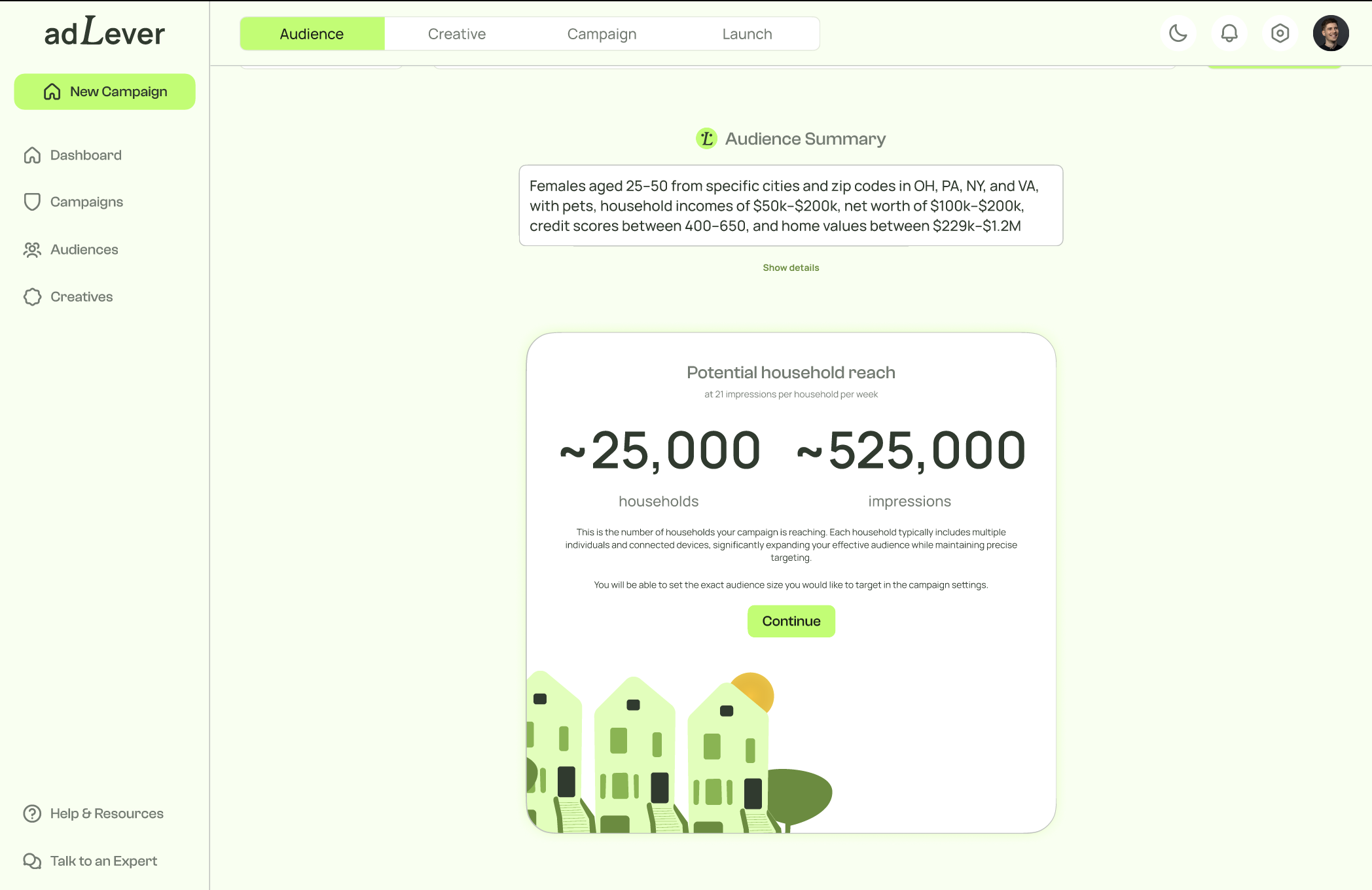
If you know your target audience, running targeted display ads through platforms like AdLever can be an extremely effective way to generate demand. AdLever lets you upload your own audience or build an audience based on criteria you define, then serve your ad campaign directly to that audience.
Understanding your audience is crucial. Conduct research to identify their needs and preferences, and build detailed buyer personas to tailor your marketing efforts more effectively.
Produce content that’s informative and engaging, addressing specific audience needs. Using varied formats—infographics, short videos, written guides—can cater to different learning preferences and improve engagement.
Marketing automation tools streamline demand generation efforts, automating repetitive tasks like email campaigns so you can focus more on strategy, while still enabling personalized communication.
Track metrics like website traffic and conversion rates regularly. Ongoing assessment helps identify what works and what needs fine-tuning.
Coordination between marketing and sales is vital for effective demand generation. Regular communication and shared insights on lead quality help both teams approach potential customers more effectively.
A few challenges come up consistently:
Demand generation is essential for successful marketing. By understanding its key concepts and applying effective strategies, businesses can generate awareness, nurture leads, and stimulate revenue growth.
As marketing evolves, staying informed and adaptable is crucial. Focusing on building strong relationships with potential customers and providing them with valuable content positions companies for long-term success.
Build an audience from your own contacts or verified household data, and reach those households on the devices they actually use.