%20(1).webp)
Cookies approximate behavior and IP addresses approximate location. Household-level targeting uses verifiable data instead.
For years, digital advertising has relied on proxies. Cookies approximate behavior. IP addresses approximate location. Modeled segments approximate intent.
The problem: approximations break down fastest where precision matters most—local markets, high-stakes messaging, and real-world outcomes.
That’s why there’s a quiet but decisive shift toward household-level targeting built on verifiable data, not assumptions. And it’s changing how advertisers and publishers think about reach, attribution, and monetization.
Most digital ad platforms optimize for scale first and accuracy second. That tradeoff works fine for brand awareness, but it fails when campaigns require:
Modeled data fills in gaps with probability. Over time, that probability compounds into waste. What looks efficient on a dashboard often turns out to be noise in the real world.
Household-level targeting flips the model. Instead of guessing who someone might be based on browsing behavior, campaigns can be anchored to who is actually at an address, based on recorded actions and registrations.
This distinction matters more than most advertisers realize:
Hard data doesn’t scale as easily—but it scales truthfully. And that truth is what lets digital advertising behave more like modern direct mail: addressable, measurable, and intentional.
One of the biggest misconceptions in ad tech is that sophistication must look complicated.
In reality, the most effective platforms do the opposite: they hide complexity behind clarity.
Self-service doesn’t mean less powerful. It means the system is finally mature enough to be usable without specialists translating every step. When campaign setup takes minutes instead of days, experimentation becomes normal instead of risky.
Household-level targeting doesn’t just benefit advertisers—it creates new monetization paths for publishers, especially digital-only publications, niche outlets, and local media brands.
When a publisher can collect first-party emails, associate them with households, and re-engage those households across premium inventory, their audience becomes portable, durable, and monetizable beyond pageviews.
Content no longer disappears after the session ends. It becomes the front door to an owned distribution channel—one that operates outside of walled gardens and algorithmic volatility.
Another quiet advantage of household-anchored delivery is fraud resistance.
Bot traffic thrives in systems optimized for volume. It struggles in systems optimized for identity. When delivery is tied to real devices associated with real addresses, the economics of fraud collapse—there’s nothing to spoof at scale.
The result isn’t just cleaner reporting. It’s restored confidence in digital reach.
The industry doesn’t need another targeting layer. It needs fewer assumptions.
As privacy standards tighten, cookies decay, and audiences fragment, the platforms that win will be the ones grounded in reality, not inference.
Household-level targeting isn’t a trend. It’s a correction—and it’s reshaping how advertisers reach people, how publishers monetize attention, and how digital campaigns finally reconnect with the real world.
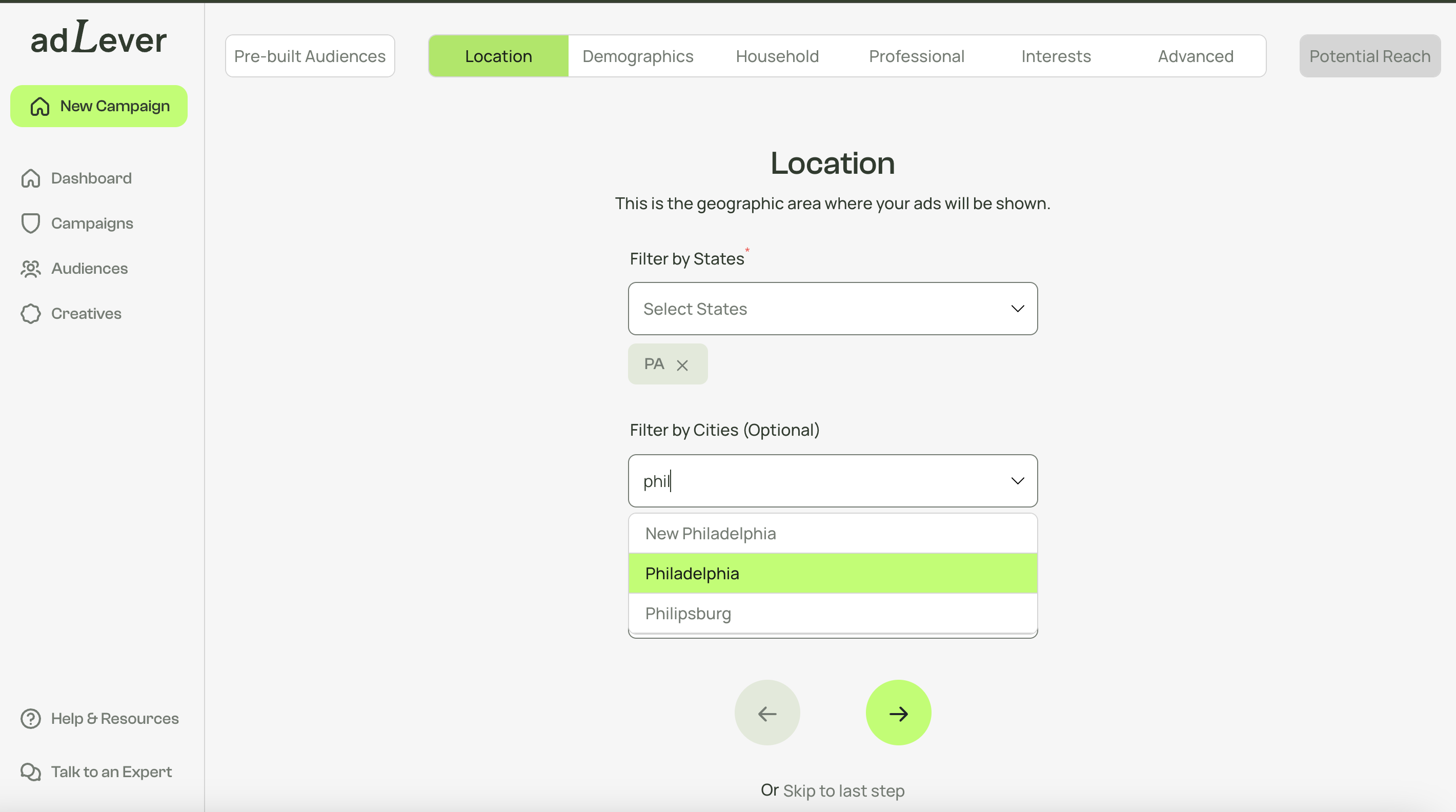
Through AdLever, you can purchase household data for use in campaigns directly on the platform. Share the location or locations you’re targeting and specific attributes—like age, gender, income level, or profession—and get instant data on your total addressable market.
Build an audience from your own contacts or verified household data, and reach those households on the devices they actually use.